
In modern industrial production, filling machines play a crucial role. Whether in the industries of food and beverages, medicine, or daily chemical products, they silently exert a huge effect, completing the filling tasks efficiently and precisely. So, what is a filling machine? How exactly do filling machines operate?
Filling machines, as their name suggests, are equipment that can fill materials like liquids, and power into containers accurately and quickly. The operation of a filling machine usually includes the following key steps.
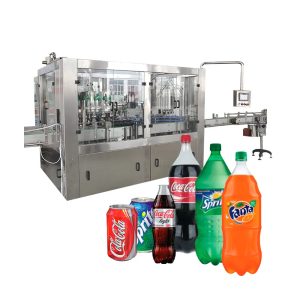
The Operation of Filling Machines
1. The Material Preparation
The materials to be filled, whether liquid, paste, or powder, will be stored in specific silos or storage tanks in advance. These materials will undergo pretreatment, such as filtration and stirring, to ensure their quality and uniformity.
Next comes the setting of the filling volume. Operators will set the precise capacity for each filling in the control system of the filling machine according to the product requirements.
2. Filling
The filling machine accurately injects the materials into the containers through a series of mechanical devices and control systems. For liquid filling, common methods include piston filling and flow rate filling. Piston filling is like the working principle of a syringe, which sucks and discharges liquid through the reciprocating motion of the piston; flow rate filling achieves the purpose of quantitative filling by controlling the flow rate and time of the liquid.
During the filling process, sensors and the control system monitor the filling volume in real-time to ensure that each container can meet the set standards.
3. Additional processing
After the filling is completed, there may be subsequent processing steps such as sealing and labeling. Take the liquid beverage filling machine as an example. Beverages are extracted from the storage tank, precisely measured, and quickly injected into the bottles, and then sealed and labeled. Bottles of finished products are thus produced quickly.
Different types of filling machines may vary in operational details, but the basic principles all revolve around precise measurement, efficient filling, and quality control.
The efficient operation of filling machines not only greatly improves production efficiency but also ensures the consistency and quality stability of products, providing strong support for the production of various industries.


