
You know how a face mask is essential for your daily skincare routine? Keeping that essence fresh and active is extremely important, and the unsung hero in all of this is the humble mask packaging. It looks simple, but that little packet is actually a highly sophisticated, multi-layer composite structure. How many layers are in a mask packaging? Usually at least three, often more! This multi-layer design isn’t overkill; it’s there to meet three core demands for preserving your mask: blocking, protection, and sealing.
The 3 Core Layers of a Mask Pouch
1. The Outer Layer (Printing/Protection Layer): PET/BOPP
Material: PET (Polyethylene Terephthalate) or BOPP (Biaxially Oriented Polypropylene).
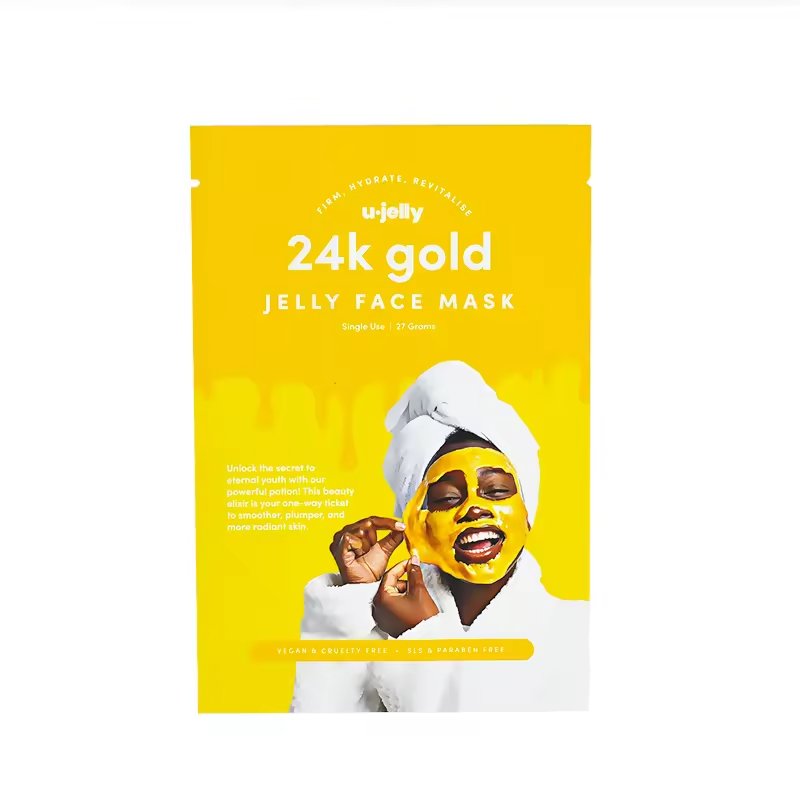
Job: This is the layer you see—where the graphics and text are printed. It needs great print quality and mechanical strength to handle the manufacturing process and daily wear and tear. It also offers some moisture protection.
2. The Middle Layer (The Core Barrier): AL or VMPET
Material: Pure Aluminum Foil (AL) or Vacuum Metalized PET (VMPET).
Job: This is the most critical layer!
Maximum Blockage: Pure aluminum foil provides near-perfect zero-light, zero-oxygen, and zero-moisture transmission.
Prevents Oxidation: Active ingredients in the essence, like Vitamin C or peptides, are easily ruined by oxygen, light, and humidity, which makes them less effective or spoils them. The aluminum layer acts like an ‘invisible safe’ to guarantee the essence stays stable and active.
3. The Inner Layer (Heat Seal/Contact Layer): PE/CPP
Material: PE (Polyethylene) or CPP (Cast Polypropylene).
Job: This layer is in direct contact with the mask sheet and the essence.
Safe and Non-Toxic: It must meet food-grade or cosmetic-grade safety standards and can’t chemically react with the essence.
Heat Sealing: This is what seals the bag shut. The PE/CPP layer melts under heat to firmly glue the edges together, creating a strong, leak-proof seal—the final defense for the liquid inside.
Why Can’t It Just Be One Layer?
1. Strength: It would easily rip, causing the essence to leak out.
2. Print Quality: You couldn’t get that beautiful branding.
3. Oxygen Barrier: Oxygen would rush in and oxidize the active ingredients.
4. Light Barrier: Light would accelerate the breakdown of the essence.
5. Seal: It couldn’t create a reliable, secure seal.
Kisen Packaging: Providing High-Standard Protection for Masks
Choose Materials Carefully: They strictly select pure aluminum foil or high-performance metalized films for the core barrier, ensuring a high barrier rate. This is especially important for essences with highly active, easily oxidized ingredients.
Use Precise Lamination: They use sophisticated, solvent-free lamination techniques. This ensures all the layers are bonded strongly and evenly, preventing separation or ‘tunneling’ (gaps that can lead to leaks).
Optimize Heat Sealing: Their packaging materials are designed for high-speed filling and sealing machines, offering excellent low-temperature sealing properties and high seal strength. This boosts manufacturing efficiency while guaranteeing the product’s seal is rock-solid.

In Summary:
It’s thanks to this multi-layer ‘smart technology’ and the strict quality control from expert brands like Kisen Packaging that we can use a face mask with confidence, knowing we’re getting the optimal skincare benefits. The mask pouch is much more than just a bag—it’s the guardian of the essence’s active life.
Click the link to contact us now and discover more about our packaging bags!


